Ares Market Complete Security Guide 2026
Comprehensive tutorial covering Tor Browser setup, PGP encryption, cryptocurrency wallets, and OPSEC practices for darknet marketplace operations. Learn about The service technical architecture and security implementation.
Introduction to Ares Market Security
The Ares guide provides comprehensive security education for understanding darknet marketplace architecture and operational security requirements. This official Ares tutorial covers technical setup procedures that were required for accessing the The service platform before the exit scam occurred in late 2024.
Security practices documented in this The platform guide remain relevant for privacy research, cryptocurrency security, and understanding darknet market operational patterns. The The service security model required multiple layers of protection including Tor network anonymity, PGP encryption, and Monero cryptocurrency privacy.
Understanding Ares official security requirements helps researchers analyze marketplace vulnerabilities, exit scam patterns, and technical architecture weaknesses that enabled administrator theft despite security claims. This Ares setup tutorial demonstrates why technical security features cannot prevent centralized marketplace exit scams.
Tor Browser Setup for Marketplace Access
Accessing the The service required Tor Browser for anonymous connection to .onion hidden services. The Tor network provides three-layer encryption routing traffic through random relay nodes, obscuring user IP addresses and preventing network surveillance. Proper Tor setup was mandatory for all official The platform users.
Step 1: Download Tor Browser
Download Tor Browser exclusively from the official Tor Project website. Ares guide emphasizes avoiding third-party download sources that may distribute malware-infected Tor Browser versions designed to compromise user security and steal cryptocurrency.
Verify Tor Browser download signature using PGP to ensure authenticity. The Tor Project provides GPG signatures for all releases, allowing cryptographic verification that downloaded file originated from legitimate Tor developers rather than malicious third parties attempting to distribute backdoored browsers.
Step 2: Configure Security Settings
Set Tor Browser security level to "Safest" for maximum protection when accessing The platform. This configuration disables JavaScript, media codecs, and browser features that could compromise anonymity through browser fingerprinting or exploit vulnerabilities. Ares official security guide required Safest setting for all users.
Enable security features in Tor Browser settings: NoScript for JavaScript blocking, HTTPS-Only mode for encrypted connections, disable WebGL and SVG rendering, resist fingerprinting through font and canvas blocking, and configure New Identity button for instant circuit rotation if connection compromise suspected.
Step 3: Tor OPSEC Best Practices
Never maximize Tor Browser window - maximized windows create unique screen resolution fingerprints enabling user tracking across sessions. The platform guide warned users to maintain default Tor Browser window size (1000x800 pixels) shared by all users for crowd anonymity.
Avoid downloading files through Tor Browser when accessing The service. Downloaded files may contain malware, document metadata linking to real identity, or executables designed to bypass Tor isolation and expose user IP address through direct internet connections.
Never log into personal clearnet accounts (Gmail, Facebook, Reddit) through Tor Browser used for The platform access. Clearnet login activity creates correlation patterns enabling identity linkage despite Tor anonymity, particularly dangerous if law enforcement monitors marketplace and clearnet accounts simultaneously.
Step 4: Advanced Tor Configuration
Use Tor bridges for censorship circumvention if ISP blocks Tor network connections. The service users in restrictive countries required obfs4 or meek bridges to disguise Tor traffic as regular HTTPS, preventing ISP detection and blocking of marketplace access attempts.
Consider Tails OS operating system for maximum security accessing Ares guide resources. Tails provides amnesia (no persistent storage), forces all connections through Tor, includes pre-configured security tools, and boots from USB leaving no traces on host computer.
Advanced users researching The platform security can deploy Whonix virtual machine architecture. Whonix separates Tor gateway from workstation virtual machine, providing stream isolation and preventing malware from discovering real IP address even if workstation completely compromised.
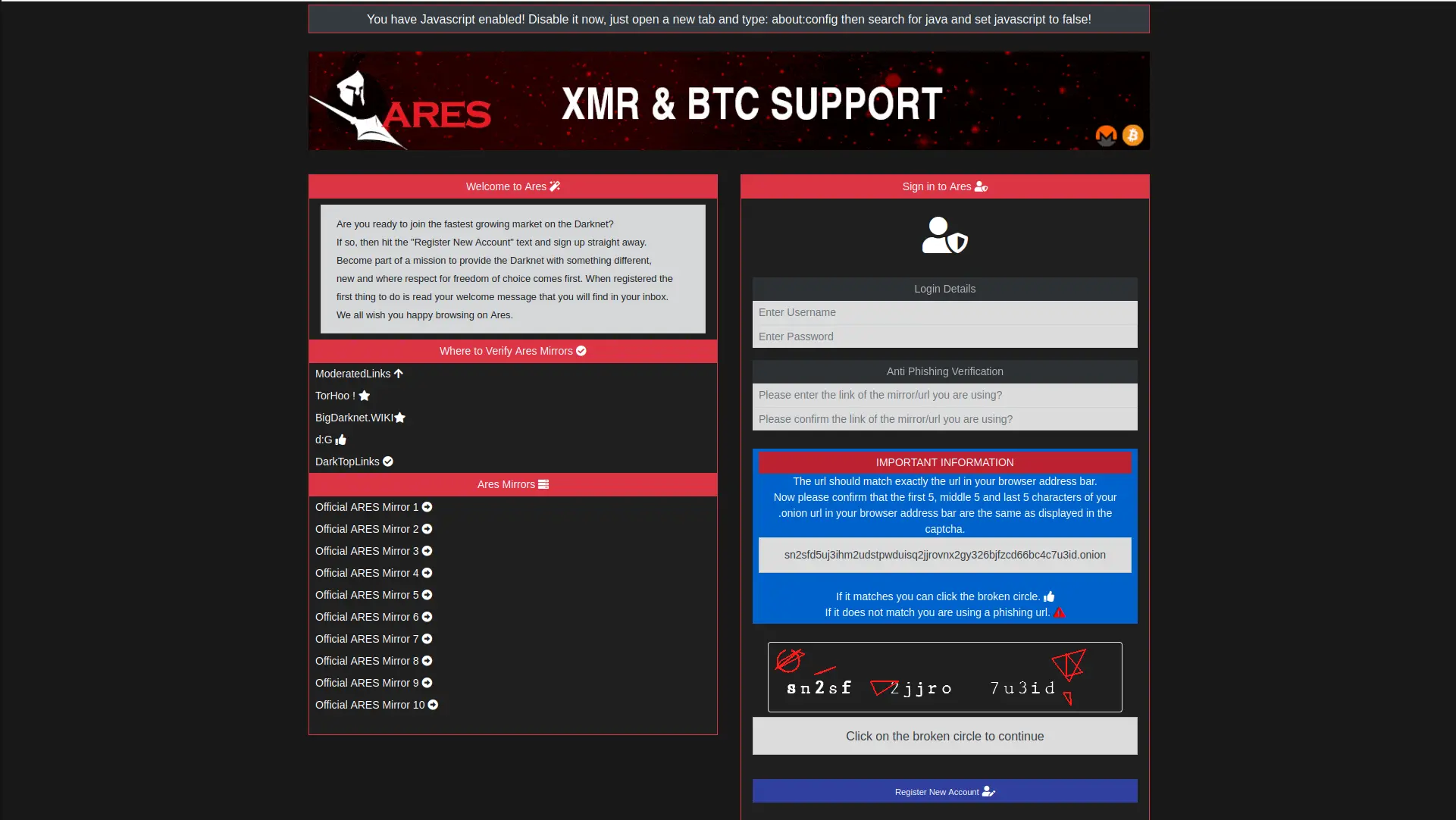
Tor Browser configuration for anonymous darknet marketplace access
PGP Encryption Setup Tutorial
Pretty Good Privacy (PGP) encryption was mandatory for all The service communications. The official The platform required PGP for vendor messages, shipping address submission, dispute communications, and administrator verification. Understanding PGP remains essential for cryptocurrency and privacy security research.
Step 1: Install GPG Software
Install GnuPG (GPG) open-source PGP implementation. Windows users install GPG4Win, macOS users install GPG Suite, Linux users install GnuPG through package managers (apt install gnupg). Ares guide recommended GPG over proprietary PGP software for security auditing and open-source verification.
Verify GPG installation by opening terminal/command prompt and typing "gpg --version". Successful installation displays GPG version number and supported algorithms. The platform tutorial required users verify GPG functional before proceeding to key generation.
Step 2: Generate PGP Key Pair
Generate 4096-bit RSA key pair for maximum security: "gpg --full-generate-key". Select RSA and RSA, key size 4096 bits, key expiration 1-2 years (renewable), enter strong passphrase using KeePassXC password manager. The service security guide required minimum 4096-bit keys for all users.
Create separate PGP keys for different marketplaces to prevent cross-identification. Ares official OPSEC tutorial warned against reusing PGP keys across multiple platforms - key reuse enables law enforcement linking activity across marketplaces through signature pattern analysis and key server correlation.
Step 3: Backup Private Key
Export and backup private PGP key securely: "gpg --export-secret-keys --armor your@email.com > private-key.asc". Store backup in encrypted container using VeraCrypt, never upload to cloud services or email to yourself. Ares guide emphasized losing private key means permanent inability to decrypt messages or verify signatures.
Print PGP key revocation certificate and store in secure physical location. If private key compromised, revocation certificate allows publishing notification that key no longer trusted. The platform users who lost keys during exit scam had no way to prove identity for potential recovery attempts.
Step 4: PGP Encryption Practice
Practice PGP encryption before using with The service: "gpg --encrypt --armor --recipient vendor@pgp yourfile.txt". Practice decryption: "gpg --decrypt encrypted.asc". Verify signatures: "gpg --verify signature.asc message.txt". Ares tutorial required users demonstrate PGP competency before submitting orders.
Import vendor PGP keys and verify fingerprints through multiple independent sources. Ares official guide warned phishing sites provide fake vendor keys enabling message decryption by attackers. Cross-reference PGP key fingerprints through Dread forum, vendor reviews, and marketplace profile before trusting.
Step 5: PGP Best Practices for Ares Market
Encrypt all shipping addresses with vendor PGP key (not marketplace key). If Ares administrators controlled marketplace PGP key, encrypted addresses accessible during exit scam or database seizure. Vendor-encrypted addresses provide protection even when marketplace compromised.
Sign messages with your PGP key to prevent impersonation. The platform supported PGP-signed communications allowing vendors verify buyer identity and preventing support ticket hijacking. During exit scam, unsigned messages claiming refunds often scam attempts by third parties.
Rotate PGP keys annually and update marketplace profiles. Old keys accumulate in databases creating forensic trail. Ares security tutorial recommended annual key rotation with 2-week transition period publishing both old and new keys before retiring old key completely.
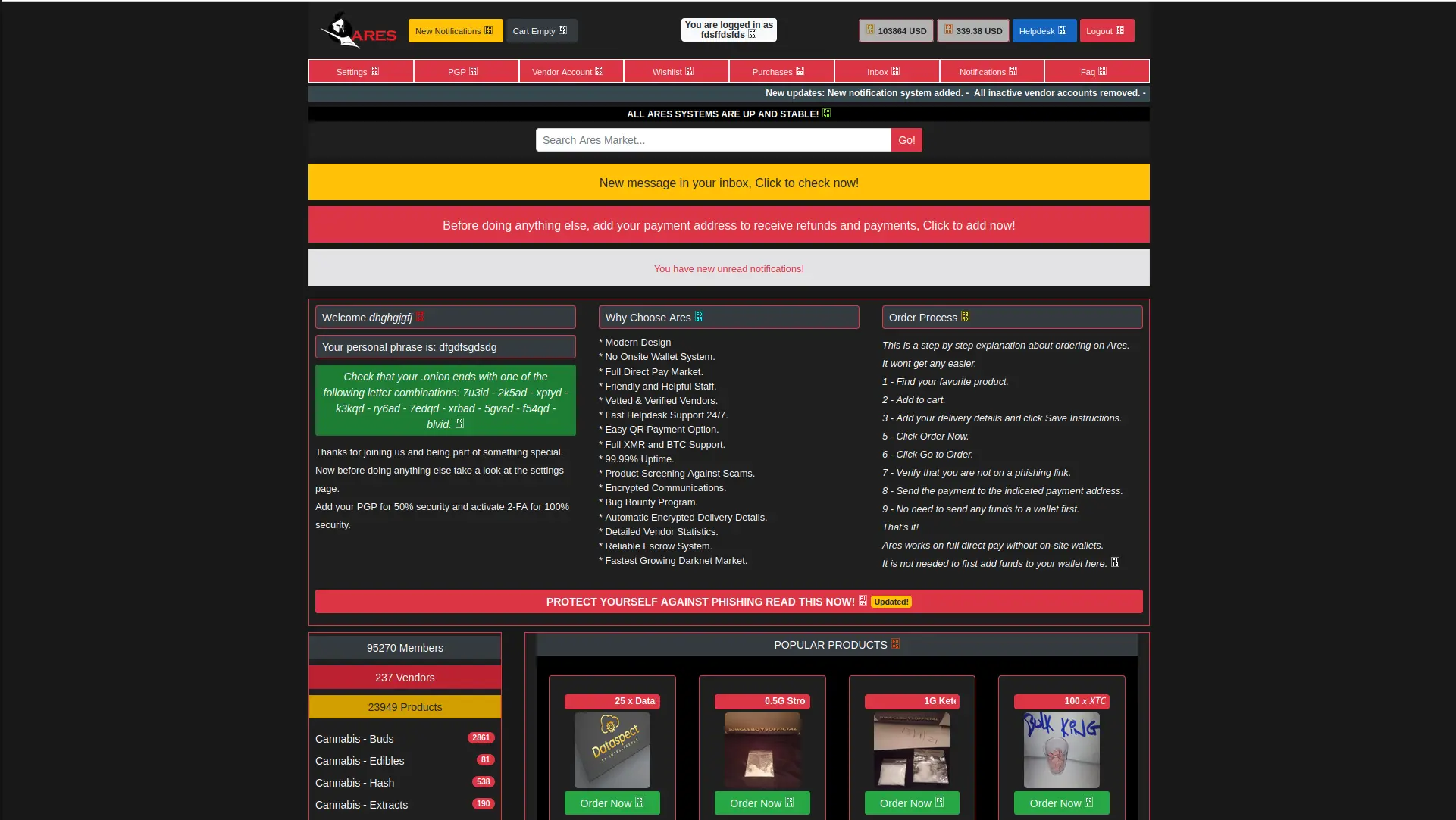
PGP encryption key generation and secure communications setup
Cryptocurrency Wallet Setup
The service accepted Monero (XMR) and Bitcoin (BTC) for transactions. Proper cryptocurrency wallet security was critical for protecting funds, particularly given The platform exit scam that stole all funds in escrow. Understanding wallet security remains essential for cryptocurrency users.
Monero Wallet Configuration
Download official Monero wallet from GetMonero.org for maximum privacy. Ares guide recommended Monero GUI wallet for beginners, Monero CLI wallet for advanced users. Never use web wallets or exchange wallets for marketplace transactions - third-party control of private keys enables fund theft.
Create new Monero wallet and backup 25-word seed phrase securely. Write seed on paper, store in fireproof safe or safety deposit box, never store digitally on internet-connected devices. The platform users who lost seed phrases during exit scam had zero recovery options for stolen funds.
Run full Monero node for maximum privacy and trustlessness. Lightweight wallets connect to remote nodes exposing transaction timing and IP addresses to node operators. Ares official security guide recommended full node despite 150GB+ blockchain size and synchronization time requirements.
Bitcoin Wallet Security
Use privacy-focused Bitcoin wallets like Wasabi Wallet with built-in CoinJoin mixing. Standard Bitcoin wallets create permanent blockchain record of all transactions traceable to exchanges and real identities. The service users who sent Bitcoin without mixing faced law enforcement tracing risk.
Generate new Bitcoin address for every transaction. Address reuse enables blockchain analysis linking multiple transactions to single user. The platform automatically generated unique deposit addresses per order, but users should also use unique withdrawal addresses to prevent output clustering.
Wallet OPSEC for Marketplaces
Never maintain balances in marketplace wallets. The service claimed wallet-less architecture but administrators still controlled escrow private keys enabling exit scam. Transfer exact order amount immediately before purchase, withdraw remaining funds immediately after order finalization.
Use separate wallets for different activities: one for marketplace transactions, separate wallet for long-term storage, separate wallet for cryptocurrency purchases from exchanges. Wallet separation prevents blockchain analysis linking marketplace activity to exchange KYC data revealing real identity.
Encrypt wallet files and store on encrypted drives. Malware specifically targets cryptocurrency wallet files attempting to steal private keys or seed phrases. Ares guide recommended VeraCrypt full-disk encryption plus wallet-specific encryption for defense-in-depth protection.

Secure cryptocurrency wallet configuration for marketplace transactions
OPSEC Practices for Anonymous Operations
Operational Security (OPSEC) prevents information leakage compromising anonymity. The platform required comprehensive OPSEC practices covering digital footprint minimization, metadata scrubbing, compartmentalization, and behavioral pattern masking. Poor OPSEC exposed users to law enforcement tracking even with perfect Tor and PGP implementation.
Operating System Security
Use Tails OS for amnesia preventing forensic recovery. Tails boots from USB, routes all traffic through Tor, includes PGP and cryptocurrency tools pre-configured, and leaves no trace on host computer. Ares official guide recommended Tails as gold standard for marketplace access.
Alternative: Whonix virtual machine architecture isolates Tor gateway from workstation. Whonix prevents malware discovering real IP even if workstation compromised, provides stream isolation preventing circuit correlation, and enables safe handling of potentially malicious files.
Advanced researchers use Qubes OS for security through compartmentalization. Qubes runs activities in isolated virtual machines preventing cross-contamination: separate VM for The service access, separate VM for cryptocurrency wallets, separate VM for PGP operations, disposable VMs for risky operations.
Network OPSEC
Never access The platform from home network. Use public WiFi (coffee shops, libraries, airports) accessed through Tails OS providing double anonymity: Tor conceals destination, public WiFi conceals identity. Rotate locations regularly preventing pattern establishment enabling surveillance.
Disable WiFi and Bluetooth when not needed. Wireless interfaces broadcast unique MAC addresses enabling device tracking across locations even when using Tails. Ares security tutorial recommended USB Ethernet adapters with randomized MAC addresses for network access.
Behavioral OPSEC
Randomize marketplace access patterns. Accessing The service same time daily creates behavioral fingerprint enabling traffic analysis correlation. Vary login times, session durations, and browsing patterns to frustrate timing analysis attacks.
Never discuss The platform activity on clearnet social media, forums, or messaging apps. Law enforcement monitors Reddit, Twitter, Discord for darknet market discussion. Users who bragged about purchases or posted reviews later arrested when correlated with controlled deliveries.
Use separate pseudonyms for different platforms. Never reuse The service username on forums, other marketplaces, or social media. Username reuse enables cross-platform correlation linking anonymous marketplace activity to potentially identifiable forum posts or social media profiles.
Physical OPSEC
Use drop addresses for deliveries, never home address. Vacant properties, abandoned buildings, or addresses under false names reduce risk of linking deliveries to real identity. The platform users arrested often used home addresses enabling direct law enforcement attribution.
Never sign for packages. Signature requirement often indicates controlled delivery (law enforcement allowing delivery then arresting recipient). Refuse packages requiring signature, deny knowledge of package contents if questioned, exercise right to remain silent immediately.
Clean house regularly removing marketplace evidence. Burn paper addresses, wipe devices used for Ares access, destroy USB drives containing Tails after extended use. During exit scam or seizure, assume law enforcement may obtain user lists prompting proactive evidence destruction.
Accessing Ares Marketplace (Historical)
This section documents The service access procedures for historical and educational purposes. The platform exit scammed in 2024-2025 and should NOT be accessed. Any remaining operational sites are phishing attempts stealing cryptocurrency and credentials.
Link Verification Process
Before exit scam, Ares official onion addresses were verified through multiple independent sources: Dread forum marketplace superlist, Dark.fail directory, PGP-signed announcements from administrators. The platform published primary and mirror links signed with verified PGP key enabling cryptographic authentication.
Verify v3 onion addresses (56 characters) rather than deprecated v2 format (16 characters). V3 onions provide improved cryptography and resistance to brute-force attacks. The service migrated to v3 addresses in 2023 following Tor Project recommendations.
First-Time Access
Upon first access, The platform displayed security warning requiring acknowledgment of risks, provided PGP public key for verification, presented login phrase system for phishing prevention. Users created accounts using unique usernames never used elsewhere and strong passwords generated through password managers.
Enable PGP-based 2FA immediately after registration. The service implemented two-factor authentication using PGP signatures rather than phone-based codes preventing real identity linkage. Users signed login challenges with private PGP keys providing cryptographic proof of identity.
Exit Scam Warning Signs
During late 2024, The platform exhibited classic exit scam indicators: support tickets deleted without response, withdrawal requests delayed 8+ months, administrators unresponsive to complaints, trust ratings collapsed to "very low" on ScamAdviser. Users who recognized warning signs early evacuated funds avoiding losses.
Other exit scam patterns: sudden new "security measures" requiring additional deposits, fake technical issues preventing withdrawals, vendors reporting unpaid finalized orders, forum moderators banning exit scam discussions. The service displayed all classic indicators before final exit.
Troubleshooting Guide
Tor Connection Issues
If Tor Browser cannot connect, check firewall settings allowing Tor traffic, try Tor bridges if ISP blocks Tor network, verify system clock accuracy (Tor requires correct time for TLS certificates), and check Tor Project website for known outages or attacks affecting network.
PGP Encryption Errors
Common PGP errors: wrong passphrase (re-enter carefully), expired key (renew or generate new key), corrupted keyring (restore from backup), missing public key (import recipient's key before encryption). Ares guide provided detailed troubleshooting for each error type.
Cryptocurrency Transaction Delays
Monero transactions confirm in ~20 minutes (10 confirmations), Bitcoin transactions vary by fee (10 minutes to hours). If The platform didn't credit deposits, wait for blockchain confirmations, verify correct address used, check blockchain explorer for transaction status, contact support with transaction ID.
During exit scam, The service stopped crediting deposits entirely. Users who sent cryptocurrency during exit scam period lost funds with zero recourse due to irreversible blockchain transactions and anonymous administrators.
🕒 Page last updated: